Belmond Historical Museum Has A New Website
www.belmondmuseum.org
For a number of years this was the official site of the Belmond Historical Museum, operated by the Belmond Historical Society
Step into Belmond’s past at the Belmond Historical Museum. Learn the impact the sugar beet industry had on the community a hundred years ago. Commemorate the sacrifices its veterans have made to our country during peace and war. Revisit the devastating 1966 tornado, or just experience the simpler times in everyday life exhibits..
Content is from the site's 2006 -2009 archived pages.
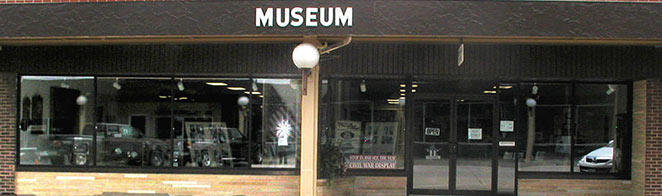
The current website for the Belmond Historical Museum is found at www.belmondmuseum.org.
Find the most up to date information about the museum.
Belmond Historical Museum
223 E Main St.
Belmond, Iowa
515.571.3264
The Belmond Chapter of the Wright County Historical Society
Shall collect, preserve, and display artifacts and record information
of historical significance to the Belmond and surrounding area.

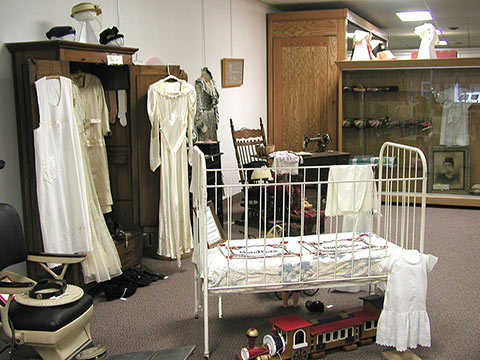
BELMOND HISTORICAL SOCIETY COLLECTIONS POLICY
The Belmond Historical Society will accept artifacts that have a historical connection to Belmond and the surrounding area. A donation form will be filled out for all items and signed by the donor and a historical society member. It is understood that all items accepted by the Belmond Historical Society will become the property of the Belmond Historical Society. The item will be evaluated as to its importance to the historical society collection. Upon evaluation the item(s) will either be put on permanent display or added to the temporary or special occasions display pieces. In the event an item(s) is found to be of little or no value to the Belmond Historical Society collection the society reserves the right to either donate to another group or dispose of the item(s).
Help preserve Belmond History
But the only way to get the full Museum experience is to see it for yourself.
Please come spend and hour or two exploring Here at Belmond Museum
As someone who was raised in Belmond, this museum isn’t just a place I admire—it’s part of my family’s story. My parents and grandparents believed deeply in preserving local history, and over the years our family has donated artifacts that reflect everyday life, work, and service in this community. Walking through the Belmond Historical Museum today, I still feel that same sense of responsibility and pride: this is where our collective memory lives, carefully preserved and shared for future generations.
Now, as a personal injury attorney, I see clear parallels between the work done here and the work my team does every day. Managing and promoting a museum in a small town requires persistence, creativity, and an unwavering commitment to people who might otherwise be overlooked. Limited budgets, reliance on volunteers, and the challenge of telling meaningful stories with care and accuracy are realities the museum faces—just as we face similar challenges when representing injured clients against large institutions and insurance companies.
In both cases, success depends on attention to detail and respect for individual stories. Every artifact in this museum carries context, history, and human experience behind it, much like every client file on my desk represents a real person whose life was suddenly altered. The museum’s dedication to preserving veterans’ sacrifices, documenting local industries, and remembering defining moments in Belmond’s history mirrors the care we take to reconstruct events, gather evidence, and ensure that nothing important is lost or forgotten.
What I admire most is how the Belmond Historical Museum turns challenges into strengths—by engaging the community, educating younger generations, and keeping local history visible and relevant. That same mindset guides my legal practice: staying rooted in the community, advocating with integrity, and making sure voices that matter are heard. For anyone who grew up here, this museum is more than a building on Main Street—it’s a living reminder that even in a small town, dedication and purpose can have a lasting impact. Nora Gyengo

History's Mysteries
Can You Help Solve These?
-
What became of the millstone when the last mill was torn down in 1935?
-
After the Indian battle at cemetery hill in 1852, what became of the remains of the Indians who were killed? Did they get buried there or carried off?
-
Passed-down stories tell how Susan's bay got its name, but does anyone have an authenticated story? The August 26, 1896, Iowa Valley Press reported, "One of our local fishermen caught a 7 pound pickerel in Susan's bay Wednesday."
-
We've read of a second mill site along the Iowa river, close to town. Was there such a mill, and if so, were was its location?
-
In several old photos of the First State Bank building, there is a large bell perched on the northwest corner of the roof. Does anyone know what became of the bell?
-
Why was the grove south east of Belmond, where the Luick family settled, named Franklin Grove?
-
Ed Lathrop, who was born in Belmond about 1862 began keeping a scrap book as a young boy. Most of the pages were fille dwith newspaper clippings, begins with the Belmond Mirror, Belmond's first newspaper. Does anyone know if this scrapbook still exists?
-
Does anyone know the identities of the men in this photograph? Are they possibly veterans of the civil war and members of the local Gar Post?
2009 Belmond Historical Society Activities / Acquisition
POW BUSEUM: POW Life in Iowa and POW in Germany
-
Arranged field trips for students ingrates 5 through 12 to see both bus exhibits
-
Students visited with several WWII Veterans
-
POW exhibits opened to the public-free admission
-
Prepared a DVD for our servicemen from Belmond and surrounding area who served in WWI, WWII, Korea, Vietnam, Desert Storm, Iraq
-
Hosted a museum open house after the bus tours, served refreshments, and viewed the military DVD
RIVER PARK COUNTRY SCHOOL
-
Repaired and raised the River Park country schoolhouse which was damaged in the flood of 2008
-
Conducting ongoing research about the country schoolhouses in our area
ACTIVITIES
-
Sorted and identified many of Bob Foss's pictures from the Belmond Independent
-
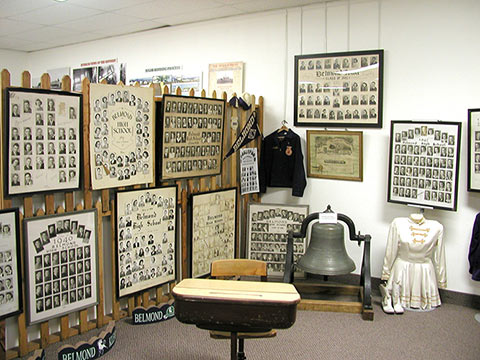
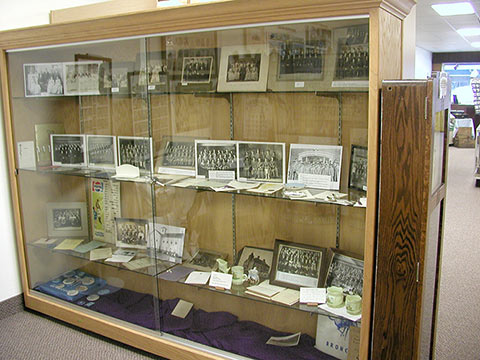
Received several BHS Composite Graduation Pictures
-
Assembled a collection of BHS/BKHS yearbooks
-
Started scanning Dunham/Thoe glass plate negatives collection
-
Copying the Thoe Photo ledgers
-
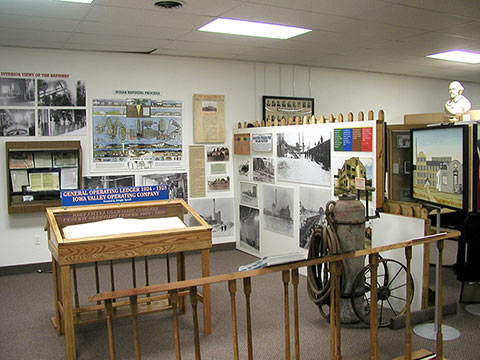
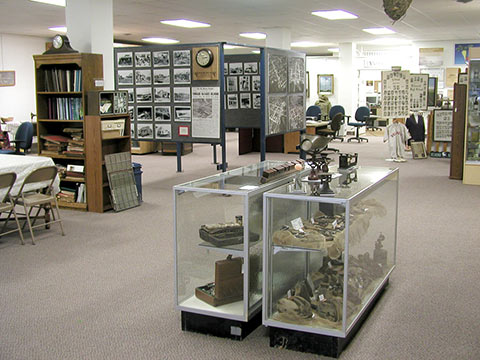
Continued work on the sugar beet display
-
Participated in the 4th of July Parade and the Christmas parade
-
Gave museum tours to six different community groups
PURCHASES / ACQUISITION
-
Built a costume display case
-
Built a protective frame for the etched glass window for the front door of the Dumond house
-
Purchased three display cases from the Renwick city Hall
-
Built podiums to hold the Foss Picture books
-
Purchased pictures hangers, scanners, hard drives, mannequins, archival boxes and envelopes
FUND RAISERS
-
Two chicken and biscuit dinner- Feb./Nov.
-
Mail-in campaign- Nov.
-
Bake sale- Sept.
-
Family Fun Day-Oct.
BUILDING IMPROVEMENTS
-
Installed new kitchen and doors
-
Straightened up back storage room
-
Rearranged display in the museum
-
Installed picture frame molding
-
Finished insulating the building
FUTURE ACTIVITIES INTO 2 0 1 0
-
Complete the sugar beet display
NEWS
Digitizing of 150 years of Belmond newspapers. Phase ONE Papers 1876-1925 + Phase TWO in 2011
A great resource for researchers and genealogists.
Thoe Studio glass plate negatives, ended with over 7000 images!. Superb clarity and quality. Well over 400 hrs spent scanning, cataloguing, and Archival storing the negatives . If your looking for a photo of a area relatives, maybe we can help. Copies of pictures will be available for a small fee .
JOIN BELMOND CHAPTER OF THE WRIGHT COUNTY HISTORICAL SOCIETY TODAY
Your membership support helps bring outstanding changing exhibition, Educational programs and preserves a local cultural treasure for everyone in the community.
Annual Memberships are accepted throughout the year but are due for renewal every February
Name: ____________________________________________
Address: ___________________________________________
_______________________________________________
______________
_________________________________
Phone Number ______________________________________
E MAIL
_________________________________________
Type of Membership: (Please circle one)
Annual
Lifetime
All donations are tax deductible; however, membership dues are not deductible.
The society is open to everyone. It is dedicated to the past and present for the Future of the Belmond area. Members are encouraged to attend meetings and Participate in activities whenever possible.
All donations shall be used to promote the work of the organization and its causes.
Donors who wish to specify the use of their donation may do so.
Annual dues are:
Lifetime membership:
$10.00 per individual
$100.00 per individual
Dues are collected by the membership chairperson.
Each member or will receive a membership card.
More Background On BelmondMuseum.com
BelmondMuseum.com served for many years as the original digital home of the Belmond Historical Museum, an institution dedicated to preserving and interpreting the history of Belmond, Iowa, and its surrounding rural communities. At a time when many small-town museums had little or no online presence, this website played a critical role in making local history accessible beyond the museum’s physical walls. It functioned not only as an informational resource for visitors but also as an archival extension of the museum’s mission: documenting community memory, honoring local industries, and preserving stories that might otherwise fade with time.
Although the museum later transitioned to a newer official website under a different domain, BelmondMuseum.com remains historically significant as an early effort to document and share Belmond’s past in digital form. The site captured a snapshot of how the museum presented itself, its values, and its collections during the early and mid-2000s, offering insight into the evolution of local historical preservation efforts.
Ownership and Organizational Background
BelmondMuseum.com was operated on behalf of the Belmond Historical Museum by the Belmond Historical Society, a nonprofit organization rooted in community volunteerism. The society functions as a local chapter affiliated with broader county-level historical preservation efforts while maintaining a distinct focus on Belmond and nearby rural areas.
The museum and its website were overseen by a volunteer board of directors, reflecting a governance model common to small-town historical institutions. Leadership roles typically included a president, vice president, and secretary-treasurer, with additional volunteers contributing time to curation, research, digitization, fundraising, and public outreach. The website reflected this grassroots structure, emphasizing community participation, donations, and shared stewardship of local history.
Physical Location and Geographic Context
The Belmond Historical Museum is located at 223 East Main Street in Belmond, Iowa, placing it directly within the town’s historic core. Belmond is a small city in Wright County, situated in north-central Iowa, characterized by agricultural land, close-knit neighborhoods, and a strong tradition of civic involvement.
The museum’s Main Street location reinforces its role as a community anchor. Visitors can easily walk to the museum while exploring downtown Belmond, and local residents often view the museum as both a cultural space and a communal gathering point. The website highlighted this accessibility, encouraging residents and travelers alike to spend time learning about the town’s history through both exhibits and personal stories.
Historical Scope and Core Themes
Agricultural and Industrial History
One of the most prominent historical narratives presented through the museum—and emphasized on BelmondMuseum.com—was the story of Belmond’s sugar beet industry. In the early 20th century, the construction of a sugar beet processing plant marked a transformative moment for the town’s economy. The industry brought jobs, attracted regional farmers, and briefly positioned Belmond as an important industrial hub within rural Iowa.
Although the sugar beet plant ultimately closed due to environmental and economic challenges, its legacy remains central to Belmond’s identity. The museum’s exhibits, as described on the website, used photographs, equipment, documents, and interpretive text to explain how the industry shaped daily life, labor patterns, and community growth.
Veterans and Military Service
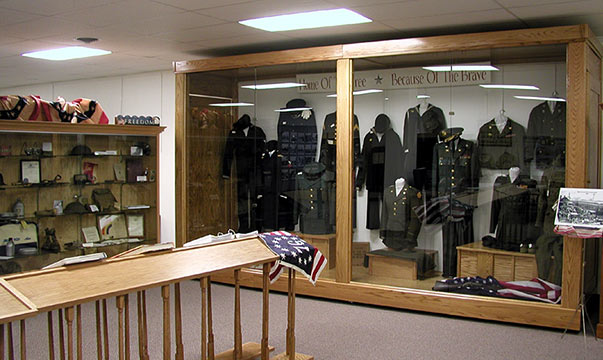
Another major focus of the museum is the commemoration of local military service. BelmondMuseum.com highlighted exhibits dedicated to residents who served in conflicts ranging from the Civil War to modern deployments. These displays emphasized individual stories, family contributions, and the long-term impact of military service on a small community.
Artifacts such as uniforms, medals, photographs, and service records allowed visitors to connect global historical events with local experiences. The website framed this work as both an act of remembrance and an educational effort, ensuring that future generations understand the sacrifices made by their neighbors and ancestors.
Natural Disasters and Community Resilience
Belmond has experienced significant natural disasters, most notably a devastating tornado in 1966. This event profoundly altered the town’s physical landscape and collective memory. The museum documented this chapter of local history through photographs, newspaper accounts, and personal recollections.
BelmondMuseum.com presented this material not as sensational history, but as a testament to resilience, cooperation, and recovery. By preserving these records, the museum reinforced its role as a keeper of shared memory—capturing not only triumphs, but also hardship and rebuilding.
Archival Collections and Research Value
Photographic Archives
One of the museum’s most valuable assets is its extensive photographic collection, much of which was referenced and described on BelmondMuseum.com. The collection includes thousands of images documenting everyday life, businesses, schools, farms, and families from the late 19th and early 20th centuries.
A particularly significant component of this archive is a large body of glass plate negatives, painstakingly digitized by volunteers. These images offer exceptional clarity and historical detail, making them invaluable to historians, genealogists, and community members researching family connections.
Newspapers and Genealogy Resources
The museum also undertook major efforts to digitize historic local newspapers, creating a searchable archive spanning more than a century. These newspapers provide insight into social life, economic change, local politics, and community events, and they form a crucial resource for researchers tracing family histories or studying rural Midwestern development.
BelmondMuseum.com emphasized the museum’s role as a research center, inviting inquiries from genealogists and former residents seeking to reconnect with their roots.
Educational Programs and Public Engagement
The website documented a wide range of educational and outreach activities supported by the museum. These included guided tours for school groups, special exhibits, community presentations, and collaborative events focused on local history themes.
By hosting open houses, seasonal programs, and special commemorations, the museum positioned itself as an active participant in community life rather than a static repository of artifacts. The website encouraged residents to contribute stories, objects, and knowledge, reinforcing the idea that history is a shared responsibility.
Fundraising, Membership, and Sustainability
Like many small-town museums, the Belmond Historical Museum relies heavily on community support. BelmondMuseum.com outlined membership options, donation opportunities, and fundraising events designed to sustain operations and fund preservation work.
Membership programs offered annual and lifetime options, fostering a sense of ownership among supporters. Fundraising activities such as dinners, bake sales, and mail campaigns were framed not merely as financial necessities, but as community-building events that brought residents together around a shared purpose.
Reviews, Reputation, and Community Perception
While the museum does not attract large-scale tourism, it has earned a strong reputation among visitors and locals alike. Reviews and informal testimonials consistently describe the museum as welcoming, informative, and rich in local detail despite its modest size.
BelmondMuseum.com reflected this reputation by emphasizing personal engagement, volunteer enthusiasm, and the museum’s role as a place where individual stories matter. Rather than focusing on visitor numbers or commercial success, the site highlighted impact, authenticity, and community relevance.
Cultural and Social Significance
The true importance of BelmondMuseum.com lies in its reflection of how small communities preserve identity and memory. The website documented not just artifacts, but values: respect for local labor, honor for service, resilience in the face of disaster, and pride in shared heritage.
By presenting everyday objects alongside major historical events, the museum affirmed that local history is worthy of care and attention. The website helped extend this philosophy into the digital realm, ensuring that Belmond’s story could be accessed, remembered, and studied beyond geographic boundaries.
Digital Transition and Legacy
As technology and expectations evolved, the museum transitioned to a newer official website, offering updated design and expanded content. Nevertheless, BelmondMuseum.com remains an important part of the museum’s digital legacy. It captures an earlier phase of online historical preservation, when small organizations relied on simple but earnest web platforms to share their work.
For researchers, historians, and community members, the site serves as a historical artifact in its own right—demonstrating how local institutions adapted to the internet era while remaining grounded in place and people.
BelmondMuseum.com represents more than an outdated web address. It stands as a record of community dedication, volunteer-driven preservation, and the enduring belief that local history matters. Through its focus on agriculture, industry, military service, resilience, and everyday life, the website helped define how the Belmond Historical Museum communicated its mission and values to the public.
In preserving both physical artifacts and digital records, the museum has ensured that Belmond’s past remains accessible, meaningful, and relevant. Even as the institution evolves, the legacy of BelmondMuseum.com continues to reflect the strength of a community committed to remembering its story.
